

Ash Wednesday marks the beginning of Lent, a sacred 40-day period of prayer, fasting, and repentance that prepares Christians for Easter. This solemn day reminds believers of their mortality and their need for God’s mercy. The practice of receiving ashes on the forehead symbolizes humility before God and a commitment to spiritual renewal.
The Bible contains numerous verses that speak to the themes of Ash Wednesday: repentance, humility, fasting, and turning away from sin. These scriptures provide the foundation for understanding why Christians observe this holy day and what it means for their faith journey.
Ash Wednesday Countdown

Ash Wednesday falls on a different date each year because it is tied to the lunar calendar and Easter Sunday. The date is calculated by counting backward 46 days from Easter (40 fasting days plus six Sundays, which are not counted as fasting days).
For 2026, Ash Wednesday will be observed on February 18. Many Christians begin preparing their hearts weeks in advance, considering what sacrifices they will make during Lent and how they will deepen their relationship with God.
Churches often publish countdown reminders to help their congregations prepare spiritually. This preparation may include examining one’s conscience, planning acts of charity, and deciding what to give up or take on during the Lenten season.
Ash Wednesday 2026 Mass Times
Catholic parishes typically offer multiple Mass times on Ash Wednesday to accommodate working families and individuals. Many churches schedule services early in the morning, during lunch hours, and in the evening.
Common Mass times include 6:30 AM, 12:10 PM, and 7:00 PM, though these vary by location. Some parishes also offer additional services specifically for the distribution of ashes without a full Mass.
It is recommended to check with your local Catholic church for their specific schedule. Many parishes post their Ash Wednesday Mass times on their websites, social media pages, or weekly bulletins several weeks in advance. Some churches also offer outdoor ash distribution for those who cannot attend indoor services.
Catholic Church Ash Wednesday

In the Catholic tradition, Ash Wednesday is observed with great reverence. Catholics attend Mass where they receive ashes on their foreheads in the shape of a cross. The priest or minister applies the ashes while saying, “Remember that you are dust, and to dust you shall return,” or “Repent, and believe in the Gospel.
The ashes are typically made by burning palm branches from the previous year’s Palm Sunday celebration. This creates a symbolic connection between the triumph of Jesus’ entry into Jerusalem and the somber reflection on human mortality and sin.
Ash Wednesday is a day of fasting and abstinence for Catholics. Adults between the ages of 18 and 59 are required to fast, meaning they eat only one full meal and two smaller meals that together do not equal a full meal. All Catholics aged 14 and older must abstain from eating meat.
The day is not considered a Holy Day of Obligation, but it is strongly encouraged that Catholics participate in the liturgy and receive ashes as a sign of their commitment to the Lenten journey.
Can You Eat Fish on Ash Wednesday
Yes, Catholics can eat fish on Ash Wednesday. The abstinence requirement on this day prohibits eating meat from warm-blooded animals such as beef, pork, chicken, and lamb. However, fish and other cold-blooded creatures are permitted.
This tradition has historical roots in the early Church, where meat was considered a luxury and abstaining from it was seen as a form of penance and self-denial. Fish, being more readily available in many regions and less expensive, became the acceptable alternative.
Popular Ash Wednesday meals include:
- Grilled or baked fish
- Tuna sandwiches
- Shrimp or seafood pasta
- Fish tacos
- Clam chowder
Many Catholic families have traditional meatless recipes they prepare during Lent. The focus remains on simple, humble meals that reflect the penitential nature of the season.
Ash Wednesday Symbolize

Ash Wednesday symbolizes several profound spiritual truths that are central to Christian faith. The ashes themselves represent mortality, as referenced in Genesis 3:19: “For dust you are and to dust you will return.
The act of receiving ashes is a public declaration of repentance. It demonstrates humility before God and acknowledgment of one’s sinfulness. The mark on the forehead serves as a visible reminder throughout the day of the commitment to turn away from sin and return to God.
Ashes also symbolize mourning and grief over sin. In biblical times, people would sit in ashes and wear sackcloth as expressions of deep sorrow and repentance. This ancient practice connects modern believers with generations of faithful followers who sought God’s forgiveness.
Additionally, Ash Wednesday symbolizes new beginnings. While it acknowledges human frailty and sinfulness, it also marks the start of a journey toward spiritual renewal and closer relationship with Christ through the discipline of Lent.
Is Ash Wednesday a Holy Day of Obligation
Ash Wednesday is not a Holy Day of Obligation in the Catholic Church. Holy Days of Obligation are specific feast days when Catholics are required to attend Mass, such as Christmas, the Assumption of Mary, and All Saints’ Day.
However, despite not being a Holy Day of Obligation, Ash Wednesday is one of the most well-attended days in the Catholic liturgical calendar. Many Catholics consider it essential to receive ashes and participate in the Mass to properly begin their Lenten observance.
The Church strongly encourages all Catholics to participate in Ash Wednesday services. The day’s significance as the gateway to Lent makes it an important marker in the spiritual life of believers, even without the formal obligation.
Marco Rubio Ash Wednesday

Public figures, including politicians, have sometimes drawn attention for their Ash Wednesday observance. Senator Marco Rubio has been photographed on several occasions wearing ashes on his forehead while conducting official business in the U.S. Senate.
These public displays have sparked conversations about faith in the public square. Some view it as a positive witness to religious commitment, while others have debated the appropriateness of wearing religious symbols during governmental duties.
For many Christians, seeing public figures maintain their Ash Wednesday observance despite busy schedules serves as encouragement to prioritize their own faith practices. It demonstrates that observing religious traditions can be integrated into professional life regardless of one’s career demands.
The practice has also raised awareness about Ash Wednesday among those unfamiliar with the tradition, creating opportunities for dialogue about Christian practices and beliefs.
Significance of Ash Wednesday
The significance of Ash Wednesday extends beyond its role as the first day of Lent. It serves as a powerful reset button for the Christian spiritual life, calling believers back to the essentials of faith.
This day emphasizes three fundamental spiritual disciplines: prayer, fasting, and almsgiving. These practices help Christians detach from worldly distractions and refocus on their relationship with God and service to others.
Ash Wednesday also serves as an equalizer. Regardless of social status, wealth, or achievement, every person who receives ashes is reminded of the same truth: we are mortal beings dependent on God’s grace. The ashes on the forehead of a CEO look the same as those on a homeless person’s forehead.
The day creates a communal experience of repentance. When believers see others walking through their day with marked foreheads, they are reminded that they are part of a larger community of faith, all committed to the same journey of spiritual growth and renewal.
Ash Wednesday 2026

Ash Wednesday in 2026 will be observed on February 18. This date falls relatively early in the year, which means Easter Sunday will be celebrated on April 5, 2026.
Churches are already beginning preparations for this important liturgical season. Many parishes plan special programs, confession opportunities, and educational sessions to help their members make the most of Lent.
Families can prepare by discussing Lenten commitments together, planning meatless meals, and establishing prayer routines. Some choose to give up certain luxuries or habits, while others take on additional service projects or devotional practices.
The early timing of Lent in 2026 means that preparation can begin even during the busy post-holiday winter months, making intentional planning even more important for those who wish to observe the season fully.
Can You Eat Chicken on Ash Wednesday
No, Catholics cannot eat chicken on Ash Wednesday. Chicken is considered meat, and Catholic law requires abstinence from meat on Ash Wednesday for all Catholics aged 14 and older.
The abstinence rule applies to all flesh meat from warm-blooded animals, which includes:
- Chicken
- Turkey
- Beef
- Pork
- Lamb
- Venison
- Any other poultry or mammal meat
This requirement extends throughout all Fridays during Lent as well. The purpose is to practice self-denial and remember Christ’s sacrifice on the cross. By giving up something we enjoy, we participate in a small way in the suffering of Christ.
Acceptable alternatives include eggs, dairy products, vegetables, grains, and fish. Many Catholics use this as an opportunity to try new recipes and discover meatless meals that can become regular parts of their diet beyond Lent.
An Ash Wednesday Prayer With Reflection Prompts
Prayer is central to the observance of Ash Wednesday. Taking time to reflect deeply on one’s spiritual condition prepares the heart for the Lenten journey ahead.
Prayer:
Heavenly Father, as I receive these ashes, I acknowledge my mortality and my need for Your mercy. I confess that I have sinned against You in thought, word, and deed. Forgive me for the times I have turned away from Your love and pursued my own selfish desires.
Create in me a clean heart, O God, and renew a right spirit within me. Help me to use this Lenten season to draw closer to You through prayer, fasting, and acts of charity. Grant me the strength to resist temptation and the wisdom to recognize Your presence in my daily life.
May these forty days transform me, that I might emerge at Easter more fully committed to following Your Son, Jesus Christ. Amen.
Reflection Prompts:
- What specific sins do I need to confess and turn away from during this Lenten season?
- How have I grown distant from God in recent months, and what steps can I take to restore that relationship?
- What sacrifice or discipline would most benefit my spiritual growth during Lent?
- How can I serve others more selflessly in the coming weeks?
- What distractions or attachments prevent me from fully experiencing God’s presence?
A Prayer for Ash Wednesday
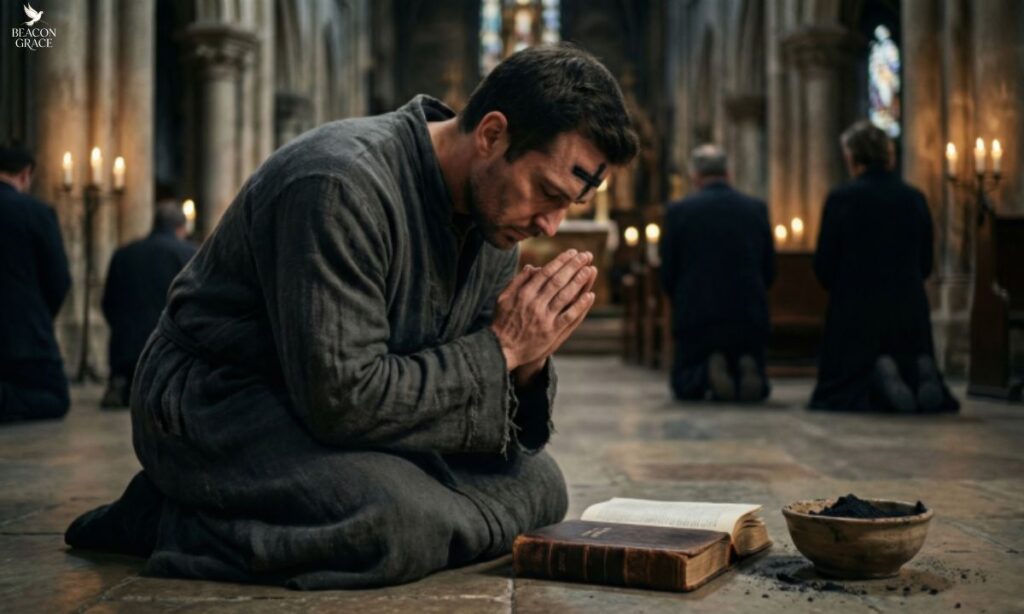
Almighty God, You do not despise a contrite and humble heart. As I begin this holy season of Lent, help me to turn away from sin and be faithful to the Gospel.
Bless these ashes that mark me as one who needs Your redemption. Remind me daily of my dependence on Your grace and the brevity of earthly life. Let this sign on my forehead be not just a public symbol, but a true reflection of my inner desire to repent and follow You more closely.
Give me courage to fast from those things that separate me from You. Fill me with compassion to give generously to those in need. Strengthen my prayer life so that I may hear Your voice more clearly.
Walk with me through these forty days. When I stumble, lift me up. When I grow weary, renew my strength. When I am tempted, be my shield. Bring me safely to the celebration of Easter with a heart transformed by Your love.
Through Jesus Christ our Lord. Amen.
Bible Verses for Ash Wednesday
Scripture provides the foundation for understanding and observing Ash Wednesday. These verses speak to the themes of repentance, fasting, mortality, and God’s mercy.
Joel 2:12-13 Even now, declares the LORD, return to me with all your heart, with fasting and weeping and mourning. Rend your heart and not your garments. Return to the LORD your God, for he is gracious and compassionate, slow to anger and abounding in love.
This passage is often read during Ash Wednesday services. It calls for genuine internal repentance, not merely external displays. God desires true transformation of the heart.
Psalm 51:10 Create in me a pure heart, O God, and renew a steadfast spirit within me.
David’s prayer after his sin with Bathsheba expresses the kind of heartfelt repentance appropriate for Ash Wednesday. It acknowledges that only God can truly cleanse and renew the human heart.
Matthew 6:16-18 When you fast, do not look somber as the hypocrites do, for they disfigure their faces to show others they are fasting. Truly I tell you, they have received their reward in full. But when you fast, put oil on your head and wash your face, so that it will not be obvious to others that you are fasting, except to your Father, who is unseen; and your Father, who sees what is done in secret, will reward you.
Jesus teaches about the proper attitude toward fasting. The emphasis should be on sincere devotion to God rather than seeking approval from others.
2 Corinthians 5:20-6:2 We are therefore Christ’s ambassadors, as though God were making his appeal through us. We implore you on Christ’s behalf: Be reconciled to God. God made him who had no sin to be sin for us, so that in him we might become the righteousness of God. As God’s co-workers we urge you not to receive God’s grace in vain. For he says, ‘In the time of my favor I heard you, and on the day of salvation I helped you.’ I tell you, now is the time of God’s favor, now is the day of salvation.
This passage emphasizes the urgency of repentance and reconciliation with God. Ash Wednesday is the perfect time to respond to God’s call.
Genesis 3:19 By the sweat of your brow you will eat your food until you return to the ground, since from it you were taken; for dust you are and to dust you will return.
These words, spoken by God to Adam after the fall, are often spoken when ashes are distributed. They remind believers of human mortality and the consequences of sin.
History of Ash Wednesday
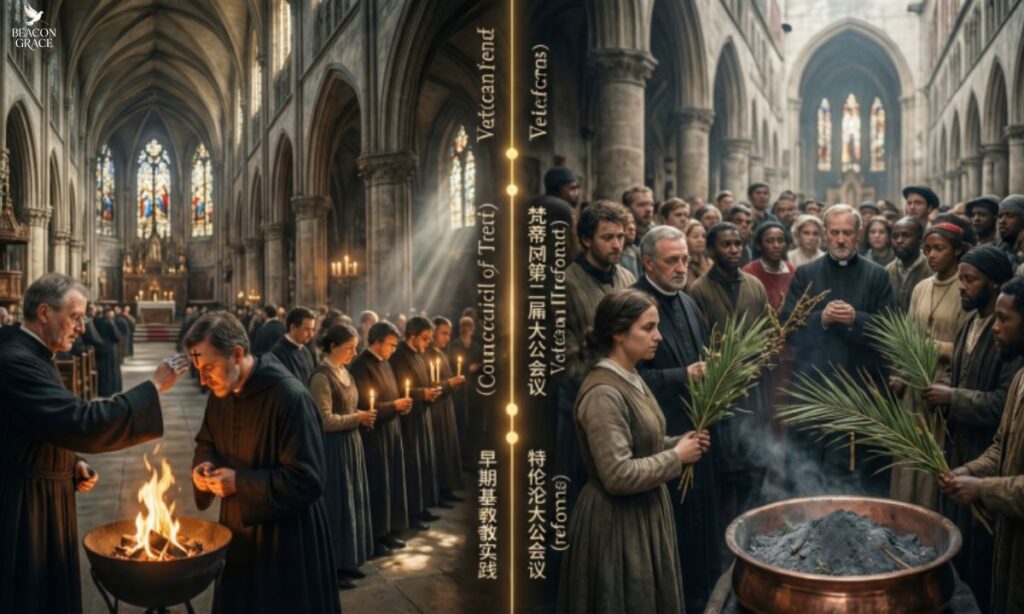
The practice of using ashes as a sign of repentance has ancient biblical roots. In the Old Testament, people sat in ashes and wore sackcloth to express grief, mourning, and repentance before God.
The Christian observance of Ash Wednesday developed gradually over several centuries. By the eighth century, the practice of marking believers with ashes on the first day of Lent was widespread in Western Christianity.
Originally, public penitents who had committed serious sins would be marked with ashes and excluded from the Eucharist until they had completed their penance, often on Holy Thursday. Over time, this practice expanded to include all believers as a sign of humility and recognition of universal sinfulness.
The ashes used were traditionally made from burning the palm branches distributed on the previous year’s Palm Sunday. This practice connected the joy of Christ’s triumphal entry into Jerusalem with the solemnity of his passion and death.
The 40-day period of Lent mirrors Jesus’ 40 days of fasting in the wilderness before beginning his public ministry. It also recalls other biblical periods of 40 days or years, including the flood in Noah’s time and Israel’s wandering in the desert.
Today, Ash Wednesday is observed by Catholics, many Protestant denominations, and Orthodox Christians, though practices and emphasis may vary among different traditions.
Do Christians Do Ash Wednesday
Ash Wednesday is observed by many Christian denominations, though not all. The practice is most common among Catholics, Anglicans, Episcopalians, Lutherans, Methodists, Presbyterians, and some other mainline Protestant churches.
Orthodox Christians observe a Lenten season but do not specifically celebrate Ash Wednesday. Their Lent begins on Clean Monday, and their fasting practices differ from Western Christian traditions.
Many evangelical and non-denominational churches do not traditionally observe Ash Wednesday, though some have begun incorporating it into their worship calendar in recent years. These communities may see value in the practices of repentance and preparation without necessarily following all traditional liturgical forms.
The decision to observe Ash Wednesday often depends on the denomination’s theological approach to liturgical seasons and traditions. Some Christians view these observances as helpful spiritual disciplines that connect them with centuries of church history. Others prefer to focus on personal devotion without formal liturgical structure.
Regardless of whether a Christian participates in Ash Wednesday services, the biblical themes it emphasizes, repentance, humility, fasting, and preparation, are valued across all Christian traditions. Every believer can benefit from regularly examining their lives, confessing sin, and recommitting to following Christ more faithfully.
Frequently Asked Questions
What is the main Ash Wednesday verse in the Bible
The most quoted verse is Joel 2:13, calling people to return to God with fasting and repentance.
Which Bible verse talks about ashes and repentance
Genesis 3:19 and Daniel 9:3 mention dust and ashes as symbols of humility and sorrow for sin.
Why is “Remember you are dust” read on Ash Wednesday
It comes from Genesis 3:19 and reminds believers of human mortality and the need for repentance.
What Gospel is read on Ash Wednesday
Matthew 6:1–6, 16–18 is commonly read, teaching about prayer, fasting, and giving in secret.
Is Joel 2:12–13 used on Ash Wednesday
Yes, it is a key passage calling people to return to the Lord with sincere hearts.
What Psalm is read on Ash Wednesday
Psalm 51 is traditionally read as a prayer of confession and mercy.
What does the Bible say about fasting on Ash Wednesday
Matthew 6 teaches that fasting should be done humbly, without showing off to others.
Are ashes mentioned directly in the Bible
Yes, ashes are mentioned as a sign of mourning and repentance in the Old Testament.
Why are repentance verses important on Ash Wednesday
They prepare believers spiritually for Lent through confession and renewed faith.
Where can I find Ash Wednesday verses in the Bible
Key passages are found in Joel, Psalms, Genesis, Matthew, and 2 Corinthians.
Conclusion
Ash Wednesday offers Christians a powerful opportunity to pause, reflect, and reorient their lives toward God. The scriptures associated with this day call believers to genuine repentance, not merely outward religious performance. Through the symbol of ashes, Christians acknowledge their mortality, confess their sinfulness, and express their dependence on God’s mercy and grace.
The practices of fasting, prayer, and almsgiving during Lent help believers detach from worldly distractions and focus on spiritual growth. Whether attending Mass to receive ashes, observing dietary restrictions, or setting aside time for deeper prayer, these disciplines serve the greater purpose of transformation.
As you prepare for Ash Wednesday and the Lenten season ahead, consider how God might be calling you to grow. What sins need to be confessed and forsaken. What spiritual practices need to be strengthened? How can you serve others more faithfully? The journey through Lent is not meant to be traveled alone but as part of the broader community of believers who together seek to follow Christ more closely. May this sacred season bring you closer to the heart of God and prepare you to celebrate the resurrection with renewed joy and faith.

Samuel Knox is a passionate content creator with 4 years of experience writing blogs on blessings, Bible verses, and prayers. Currently, he contributes his expertise at Beacongrace.com, inspiring readers through faith-based content